

Food Vocabulary in Portuguese: The Ultimate Guide
Food, language, and everyday life in Brazil
From arroz e feijão to the restaurant bill: learn the vocabulary that actually appears around food in Brazil.
A useful food list should help you do more than identify fruit. This guide connects ingredients, meals, cooking, shopping, restaurant language, regional variation, and dietary needs so you can understand what people say and respond in complete phrases.
11 practical topic groups
restaurant and market phrases
dietary restrictions
Quick answer
The most useful Brazilian Portuguese food vocabulary begins with complete situations: café da manhã, almoço, jantar, arroz, feijão, carne, legumes, cardápio, pedido, conta, sem glúten, and phrases such as Eu queria…, Vem com quê?, and Esse prato leva leite?
The 150 numbered entries below include single words and fixed multiword expressions. Learn the article together with the noun—o arroz, a carne, o cardápio—and then place the vocabulary inside a phrase you might genuinely use.
Vocabulary is more than translation
How to learn Brazilian Portuguese food vocabulary efficiently
Learn the article with the noun
Store a cebola, not only cebola. The article helps you remember grammatical gender and build agreement later: a cebola picada.
Learn words inside actions
Connect nouns to useful verbs: comer arroz, beber suco, picar cebola, pedir a conta.
Separate recognition from production
You may need to recognize berinjela on a menu before you ever need to say it. Prioritize production for words connected to your own diet.
Study by situation
Practice one group for cooking, one for the supermarket, and one for restaurants. Situation-based recall is stronger than an alphabetical list.
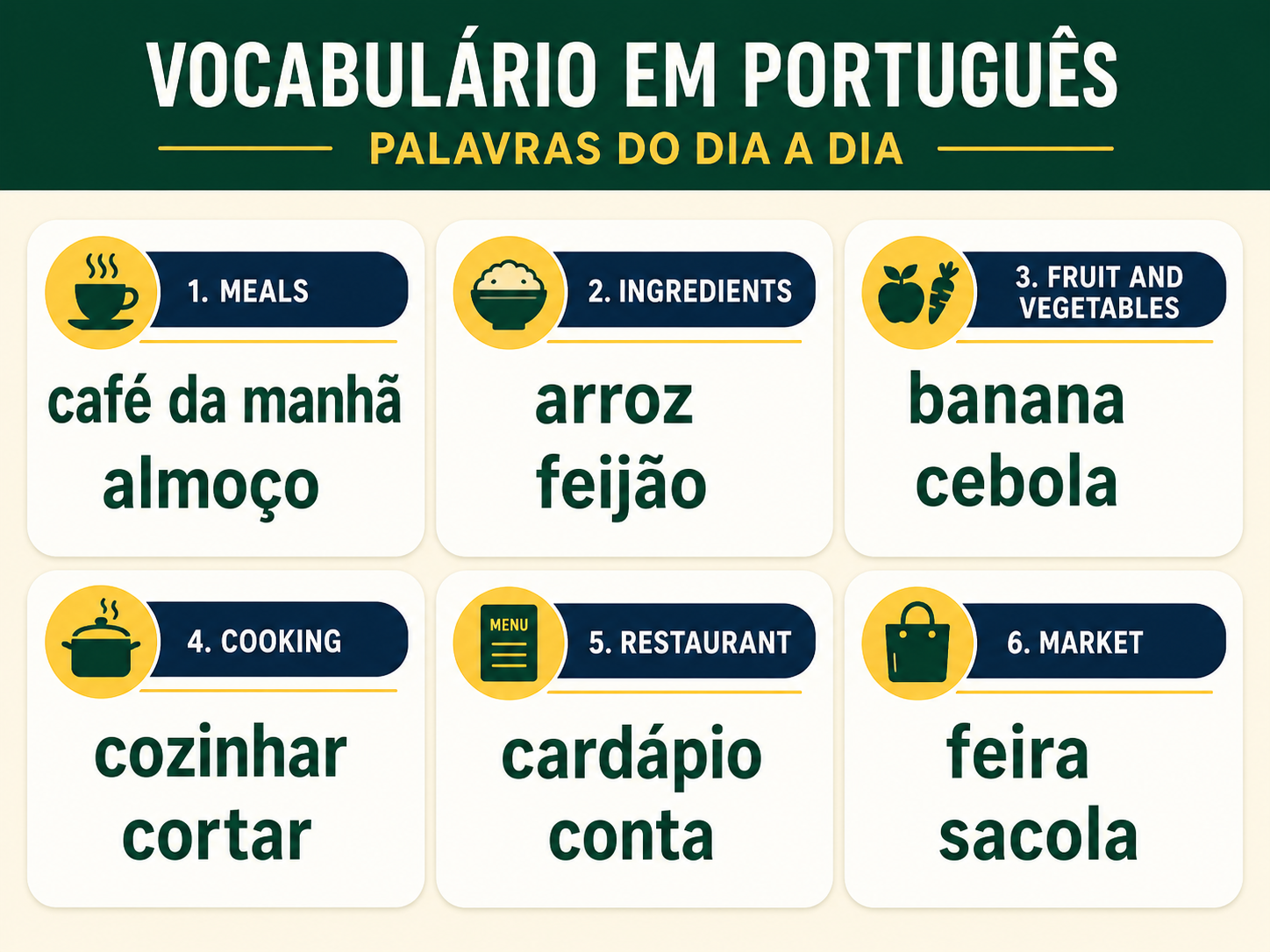
15 vocabulary items
Meals and everyday food
| # | Brazilian Portuguese | English and usage |
|---|---|---|
| 1 | a comida | food; cooked foodEveryday word for food in general. |
| 2 | a refeição | mealA complete eating occasion. |
| 3 | o café da manhã | breakfastThe standard everyday term. Desjejum exists but is more formal and far less common in ordinary conversation. |
| 4 | o almoço | lunchOften the main hot meal of the day. |
| 5 | o jantar | dinnerMay be a full meal or something lighter, depending on the household. |
| 6 | o lanche | snack; light meal; sometimes a sandwichDo not confuse it with English lunch. |
| 7 | a sobremesa | dessertLiterally the course served after the meal. |
| 8 | a entrada | starter; appetizerThe first course on a menu. |
| 9 | o prato principal | main courseThe central dish of the meal. |
| 10 | o acompanhamento | side dishRice, beans, salad, fries, and farofa can be accompaniments. |
| 11 | o petisco | small bite; bar snackCommon in bars and when sharing food. |
| 12 | a marmita | packed or takeaway mealA meal carried in a container, often for work. |
| 13 | o prato feito (PF) | set plate mealUsually a fixed combination such as rice, beans, salad, and protein. |
| 14 | o rodízio | continuous fixed-price serviceFood is offered repeatedly for a fixed price; the exact service style depends on the restaurant. |
| 15 | o restaurante por quilo | pay-by-weight restaurantYou serve yourself and pay according to the weight of the plate. |
20 vocabulary items
Staples and ingredients
| # | Brazilian Portuguese | English and usage |
|---|---|---|
| 16 | o arroz | rice |
| 17 | o feijão | beansA central everyday pairing with rice in many Brazilian meals. |
| 18 | a farinha | flourThe general word; specify farinha de trigo, de mandioca, de milho, and so on. |
| 19 | a farinha de mandioca | cassava flourUsed in farofa and many regional preparations. |
| 20 | a farofa | toasted seasoned cassava-flour dishUsually served as an accompaniment. |
| 21 | a mandioca | cassava; maniocA nationwide term, with regional alternatives. |
| 22 | o aipim / a macaxeira | cassava; maniocRegional names for mandioca. |
| 23 | o milho | corn |
| 24 | a massa | dough; pastaContext determines whether it means dough, pasta, or a mixture. |
| 25 | o macarrão | pasta; noodlesA very common everyday term for cooked pasta. |
| 26 | o pão | bread |
| 27 | o ovo | egg |
| 28 | o queijo | cheese |
| 29 | o leite | milk |
| 30 | a manteiga | butter |
| 31 | o óleo | cooking oil |
| 32 | o azeite | olive oilUsually azeite de oliva when precision is needed. |
| 33 | o açúcar | sugar |
| 34 | o sal | salt |
| 35 | o tempero | seasoningCan refer to one seasoning or a prepared seasoning mixture. |
15 vocabulary items
Fruits
| # | Brazilian Portuguese | English and usage |
|---|---|---|
| 36 | a banana | banana |
| 37 | a maçã | apple |
| 38 | a laranja | orange |
| 39 | o limão | lime or lemon, depending on the varietyIn Brazil, the common green limão-taiti is typically translated as lime. |
| 40 | a manga | mango |
| 41 | o mamão | papaya |
| 42 | o abacaxi | pineapple |
| 43 | a melancia | watermelon |
| 44 | o melão | melon |
| 45 | o morango | strawberry |
| 46 | a uva | grape |
| 47 | o maracujá | passion fruit |
| 48 | o açaí | açaíStress falls on the final í. |
| 49 | o caju | cashew fruitThe fruit and the nut are different parts; the nut is castanha de caju. |
| 50 | a goiaba | guava |
15 vocabulary items
Vegetables and greens
| # | Brazilian Portuguese | English and usage |
|---|---|---|
| 51 | a alface | lettuce |
| 52 | o tomate | tomato |
| 53 | a cebola | onion |
| 54 | o alho | garlic |
| 55 | a cenoura | carrot |
| 56 | a batata | potato |
| 57 | a batata-doce | sweet potato |
| 58 | a abóbora | pumpkin; squashThe exact variety varies by region. |
| 59 | a abobrinha | zucchini |
| 60 | o chuchu | chayote |
| 61 | o quiabo | okra |
| 62 | a couve | collard greens; kale-like leafy greenCouve refogada is a common accompaniment. |
| 63 | o repolho | cabbage |
| 64 | a berinjela | eggplant |
| 65 | a beterraba | beet |
15 vocabulary items
Meat, fish, and common cuts
| # | Brazilian Portuguese | English and usage |
|---|---|---|
| 66 | a carne | meatWithout further specification, it may imply beef in some contexts. |
| 67 | a carne bovina | beef |
| 68 | a carne de porco | pork |
| 69 | o frango | chicken |
| 70 | o peixe | fish |
| 71 | o camarão | shrimp; prawn |
| 72 | a linguiça | seasoned sausageNot the same as salsicha. |
| 73 | a salsicha | frankfurter; hot-dog sausage |
| 74 | o presunto | ham |
| 75 | a picanha | picanha; rump capA well-known Brazilian cut from the sirloin-cap area; direct equivalents vary by butchering system. |
| 76 | a alcatra | rump; top sirloin regionButchery equivalents vary between countries. |
| 77 | a fraldinha | flank-like beef cutInternational cut equivalence is not always exact. |
| 78 | a costela | ribs |
| 79 | a carne moída | ground beef; minced meat |
| 80 | o filé | fillet; steak cutThe exact cut depends on the full name, such as filé-mignon. |
10 vocabulary items
Drinks
| # | Brazilian Portuguese | English and usage |
|---|---|---|
| 81 | a água | water |
| 82 | a água com gás | sparkling water |
| 83 | o café | coffee |
| 84 | o cafezinho | a small coffeeAlso a social invitation or gesture of hospitality. |
| 85 | o chá | tea |
| 86 | o suco | juiceThe standard Brazilian term; Portugal commonly uses sumo. |
| 87 | o refrigerante | soft drink; soda |
| 88 | a cerveja | beer |
| 89 | o vinho | wine |
| 90 | a cachaça | Brazilian sugarcane spiritThe base spirit in a caipirinha. |
12 vocabulary items
Flavors and textures
| # | Brazilian Portuguese | English and usage |
|---|---|---|
| 91 | doce | sweet |
| 92 | salgado | salty; savoryAs a noun, um salgado is a savory snack. |
| 93 | azedo | sour |
| 94 | amargo | bitter |
| 95 | apimentado | spicy; containing hot pepper |
| 96 | sem graça | bland; lacking flavorLiterally also means unfunny or dull in other contexts. |
| 97 | crocante | crunchy; crisp |
| 98 | macio | soft; tender |
| 99 | duro | hard; tough |
| 100 | cremoso | creamy |
| 101 | seco | dry |
| 102 | suculento | juicy; succulent |
12 vocabulary items
Cooking actions
| # | Brazilian Portuguese | English and usage |
|---|---|---|
| 103 | cozinhar | to cook |
| 104 | assar | to bake; to roast |
| 105 | grelhar | to grill |
| 106 | fritar | to fry |
| 107 | refogar | to sautéOften used for onions, garlic, greens, and rice. |
| 108 | ferver | to boil |
| 109 | cozinhar no vapor | to steam |
| 110 | cortar | to cut |
| 111 | picar | to chop |
| 112 | fatiar | to slice |
| 113 | misturar | to mix |
| 114 | temperar | to season |
12 vocabulary items
Kitchen and table utensils
| # | Brazilian Portuguese | English and usage |
|---|---|---|
| 115 | a panela | pot; saucepan |
| 116 | a frigideira | frying pan; skillet |
| 117 | a assadeira | baking tray; roasting pan |
| 118 | a tampa | lid |
| 119 | a faca | knife |
| 120 | o garfo | fork |
| 121 | a colher | spoon |
| 122 | a colher de pau | wooden spoon |
| 123 | o prato | plate; dish |
| 124 | a tigela | bowl |
| 125 | o copo | drinking glass |
| 126 | a xícara | cupNormally a handled cup for coffee or tea. |
14 vocabulary items
Shopping and restaurant vocabulary
| # | Brazilian Portuguese | English and usage |
|---|---|---|
| 127 | o supermercado | supermarket |
| 128 | a feira | open-air market; fairA feira livre commonly sells produce and other goods. |
| 129 | o hortifruti | produce section or produce storeShort for hortifrutigranjeiros. |
| 130 | o açougue | butcher shop; meat counter |
| 131 | a padaria | bakeryBrazilian padarias often also sell meals, snacks, drinks, and groceries. |
| 132 | o caixa | checkout; cashierThe noun is commonly masculine for the checkout point or cashier role. |
| 133 | o carrinho | shopping cart |
| 134 | a cesta | basket |
| 135 | o cardápio | menu |
| 136 | a conta | bill; check |
| 137 | o pedido | order |
| 138 | a porção | portion; sharing plate |
| 139 | o self-service | self-service buffetA common Brazilian restaurant label. |
| 140 | o buffet | buffet |
10 vocabulary items
Orders and dietary needs
| # | Brazilian Portuguese | English and usage |
|---|---|---|
| 141 | sem carne | without meat |
| 142 | vegetariano / vegetariana | vegetarianThe ending agrees with the person or noun. |
| 143 | vegano / vegana | veganThe ending agrees with the person or noun. |
| 144 | sem glúten | gluten-free; without gluten |
| 145 | sem lactose | lactose-free; without lactose |
| 146 | tenho alergia a… | I am allergic to…Use the exact ingredient: Tenho alergia a amendoim. |
| 147 | tenho intolerância a… | I am intolerant to…Example: Tenho intolerância à lactose. |
| 148 | malpassado | rare; less cookedUsed especially for meat. |
| 149 | ao ponto | medium; cooked to the requested pointRestaurant interpretations vary. You may also hear ao ponto para mal or ao ponto para bem. |
| 150 | bem-passado | well-doneUsed especially for meat. |
Words that mislead English speakers
Food false friends and confusing translations
Legumes are not necessarily “legumes”
In everyday Brazilian Portuguese, legumes commonly refers broadly to vegetables such as carrots, potatoes, zucchini, and chayote. Beans, lentils, chickpeas, and peas belong to the category leguminosas.
Lanche is not lunch
Lunch is almoço. A lanche can be a snack, a light meal, or—in some contexts—a sandwich.
Massa can mean pasta or dough
On a menu, massas often names the pasta section. In a recipe, massa may be dough, batter, or a mixture.
Presunto means ham
It has no connection to English presumed. A common sandwich is misto quente, usually made with ham and cheese.
Tempero means seasoning
Temperature is temperatura. Tempero refers to salt, herbs, spices, garlic, or a seasoning mixture.
Pimenta needs context
It can refer to hot pepper or pepper seasoning. Pimenta-do-reino is black pepper; pimentão is bell pepper.
One ingredient may have several names
Regional food vocabulary across Brazil
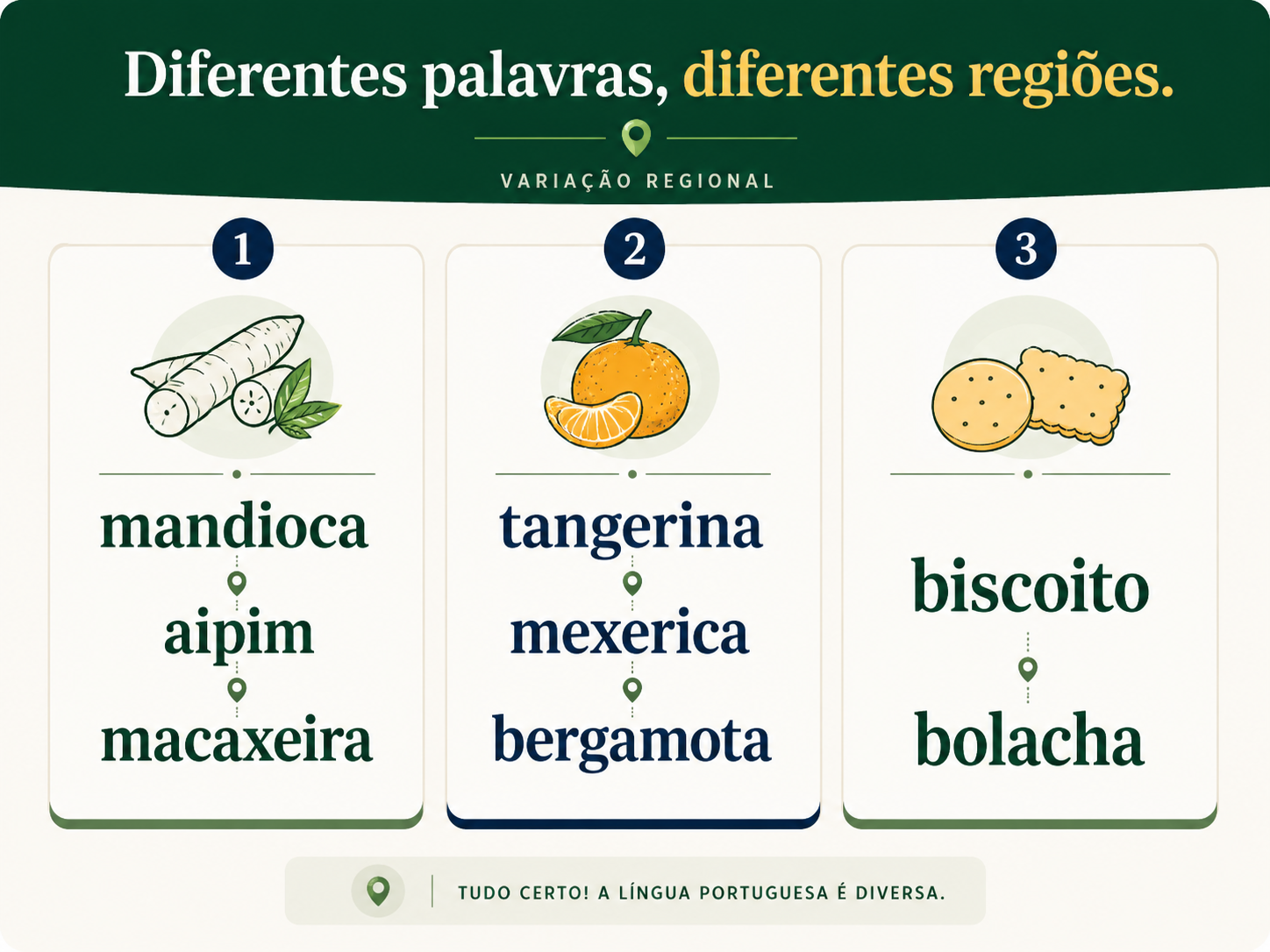
Brazil does not have one uniform food vocabulary. The safest strategy is to learn a widely recognized term and become receptive to regional alternatives.
mandioca · aipim · macaxeira
Three widely recognized names for cassava, with regional preferences.
tangerina · mexerica · bergamota
Common regional names for related mandarin-type citrus fruits.
biscoito · bolacha
Both are widely understood. Regional preference can become a playful identity debate.
pão francês and local names
The small crusty roll may also be called pão de sal, cacetinho, careca, and other regional names.
sacolé · geladinho · dindim · chup-chup
Regional names for a frozen drink or dessert sold in a plastic tube or bag.
açaí is not served one single way
Preparation and accompaniments vary greatly. In parts of northern Brazil, açaí may accompany savory foods; sweet bowls are widespread elsewhere.
For country-level differences rather than regional Brazilian variation, see our guide to Brazilian Portuguese and European Portuguese.
Cultural vocabulary you will meet on menus
Ten Brazilian dish names worth recognizing
These names are usually kept in Portuguese. Recipes and serving styles vary by region, cook, restaurant, and family, so treat each description as a practical introduction rather than one fixed national recipe.
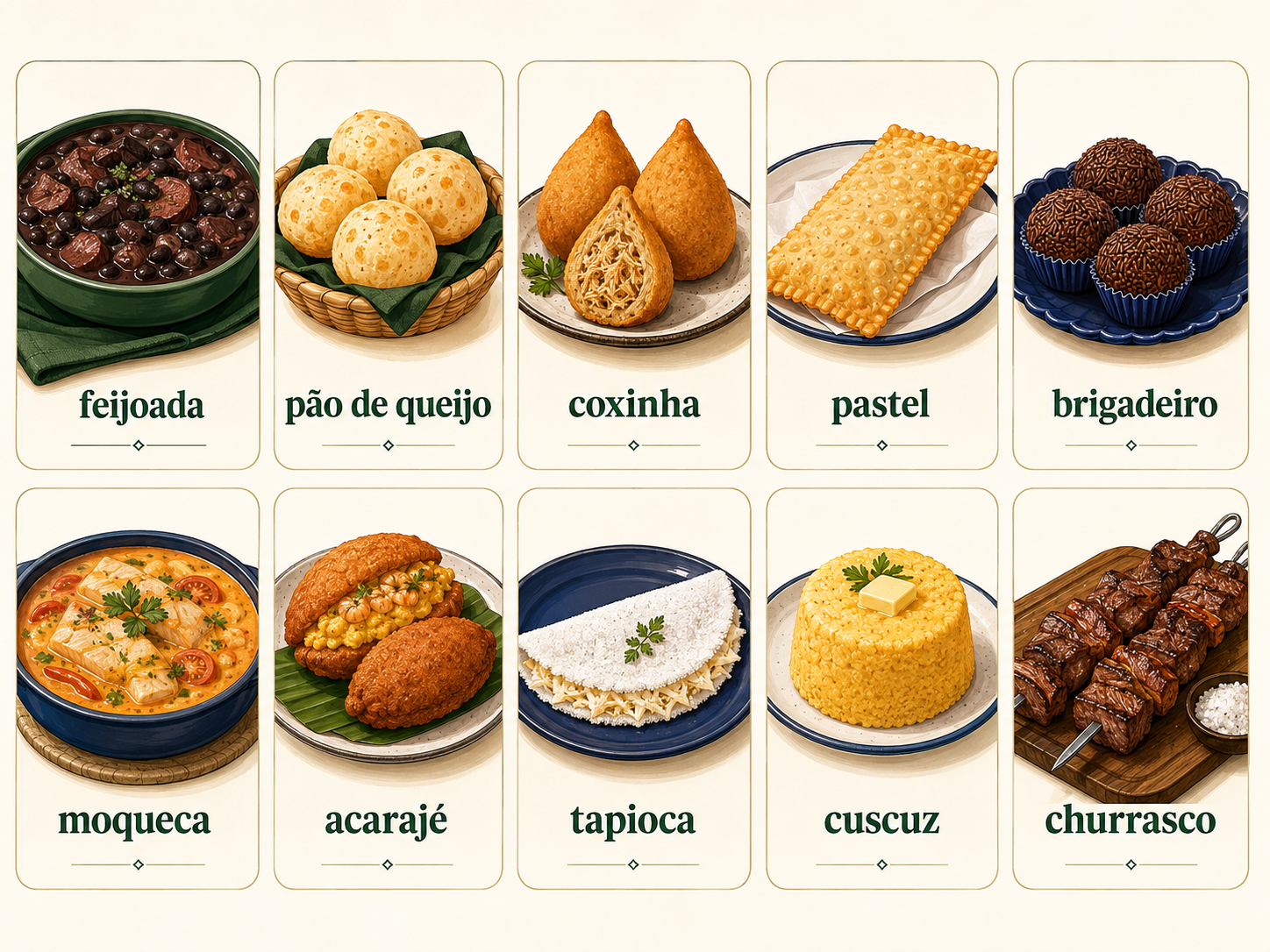
Feijoada
A black-bean stew commonly prepared with pork and other meats, usually served with rice and accompaniments such as farofa and couve.
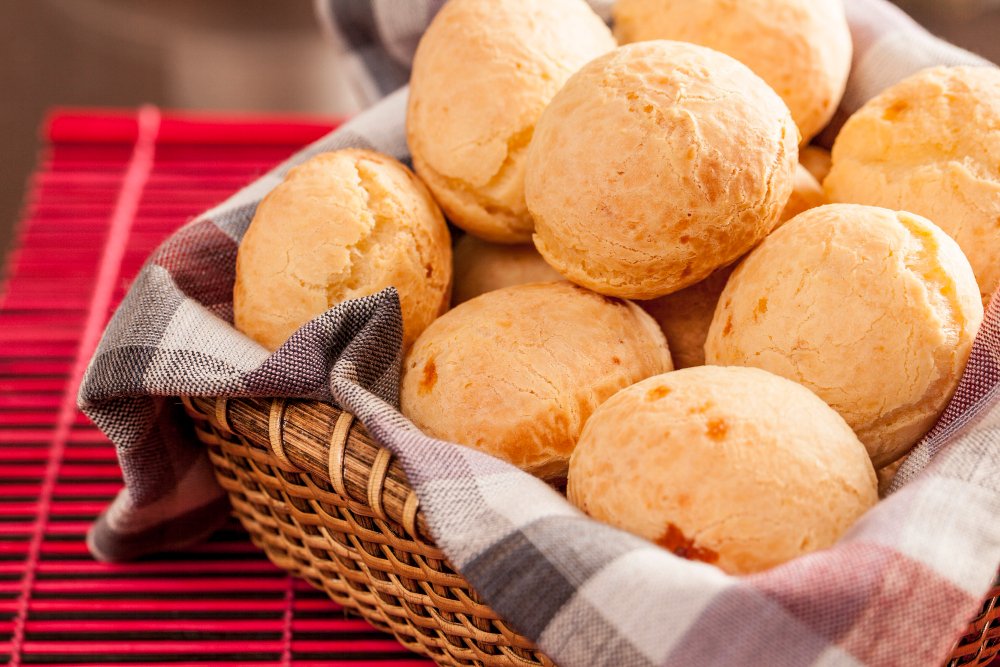
Pão de queijo
Small cheese breads made with cassava starch, strongly associated with Minas Gerais and eaten throughout Brazil.
Coxinha
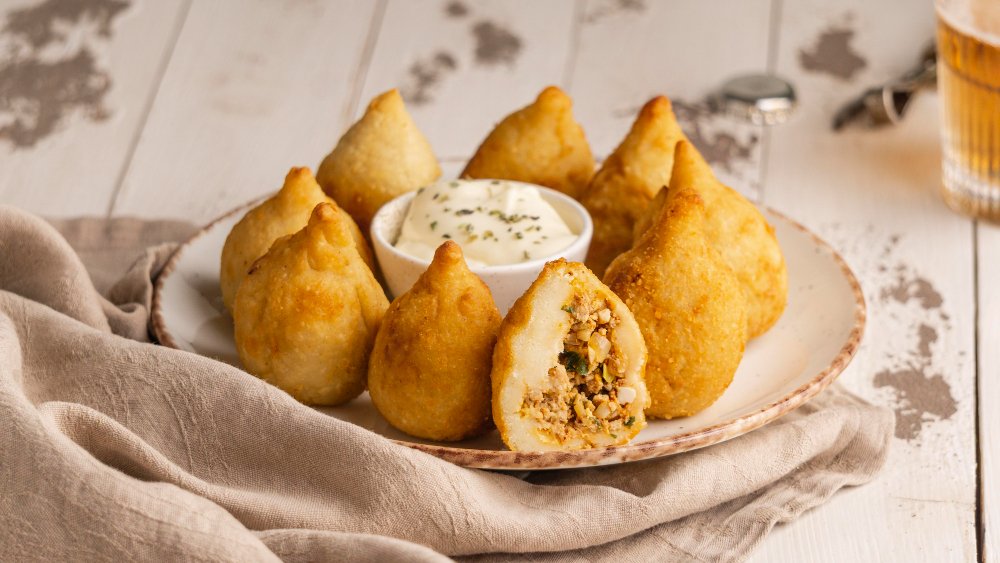
A fried savory snack traditionally filled with shredded chicken; fillings and dough styles vary.
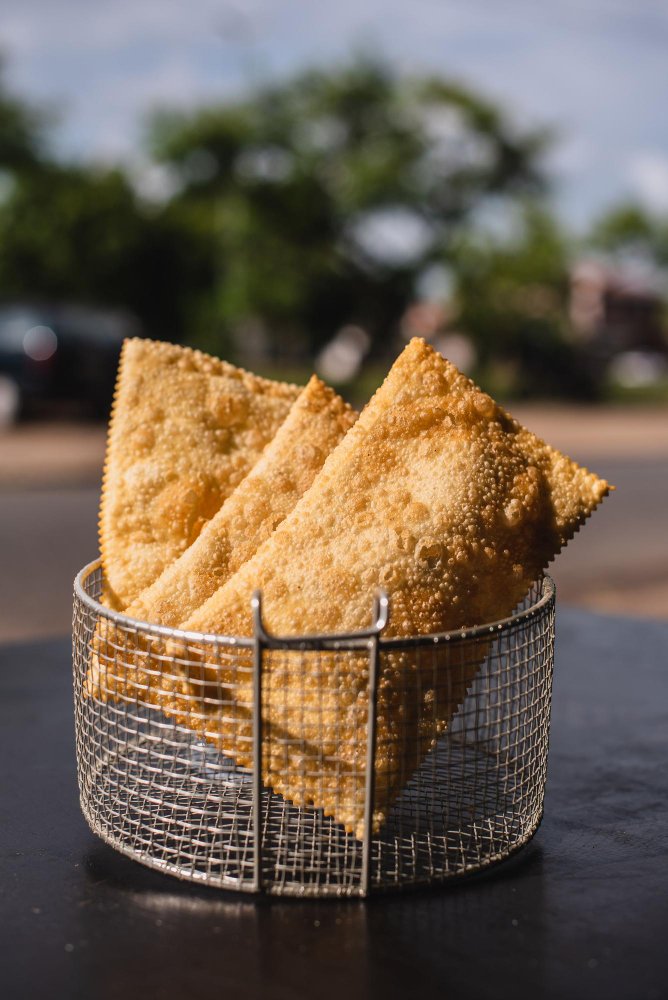
Pastel
A thin, crisp fried pastry with savory or sweet fillings, especially common at open-air markets.
Brigadeiro
A soft chocolate sweet commonly made with condensed milk, chocolate or cocoa, butter, and sprinkles.
Moqueca
A family of fish or seafood stews. Well-known Bahian and Espírito Santo versions use different ingredients and techniques.
Acarajé
A black-eyed-pea fritter fried in dendê oil and strongly connected to Bahia and Afro-Brazilian cultural and religious traditions.
Tapioca
A skillet preparation made from hydrated cassava starch and folded around savory or sweet fillings.
Cuscuz
In many Brazilian contexts, especially in the Northeast, this is a steamed corn-flake dish served in many different ways.
Churrasco
Grilled meat and, just as importantly, a social gathering built around the grill. Cuts and traditions vary across Brazil.
Three popular savory snacks
What you may see at a bakery, snack bar, or market
These foods are common enough that learners usually encounter the Portuguese names very early.
Move from nouns to interaction
Useful food phrases in Brazilian Portuguese
For a fuller restaurant sequence, continue with How to Order Food in Portuguese. For prices, cards, Pix, and checkout questions, use How Brazilians Pay for Things.
Clarity matters more than elegance
How to communicate allergies and dietary restrictions
Do not rely only on a memorized phrase when the medical risk is serious. Name the exact ingredient, ask about sauces and preparation, confirm possible cross-contact, and read the package label. Brazilian food labels include mandatory information about ingredients and regulated warnings involving allergens, lactose, and gluten.
Useful words on Brazilian packaged-food labels
Vocabulary in complete exchanges
Three real-life Brazilian Portuguese food dialogues
At a restaurant
Customer: O prato feito vem com quê?
Server: Arroz, feijão, salada e batata frita.
Customer: Pode ser com frango grelhado e sem cebola?
Server: Claro.
At an open-air market
Customer: Quanto está o quilo da manga?
Vendor: Oito reais.
Customer: Pode escolher duas bem maduras para mim?
Vendor: Posso, sim.
Checking an ingredient
Customer: Esse molho leva leite?
Server: Leva creme de leite.
Customer: Então pode trazer sem o molho?
Server: Sem problema.
Vocabulary reflects routines and regions
Food culture without turning tendencies into rules
Brazilian meals vary by region, household, religion, income, schedule, health needs, and personal preference. Still, learners will frequently encounter combinations built around rice, beans, vegetables, and a protein; breakfast items such as bread, fruit, coffee, couscous, tapioca, or eggs; and an enormous range of regional dishes. Official Brazilian dietary guidance also uses the three broad meal labels café da manhã, almoço, and jantar, while emphasizing regional variety and shared meals.
Read Brazilian Mealtimes and Meal Names for the cultural schedule, and try the site’s listening practice about favorite Brazilian foods for natural speech.
A seven-day study plan
How to remember 150 food words without memorizing one giant list
- Day 1: meals and your own routine. Write what you normally eat for café da manhã, almoço, lanche, and jantar.
- Day 2: your kitchen. Label ten ingredients and six utensils you actually use.
- Day 3: supermarket and market. Build a shopping list and practice quantities with our numbers in Portuguese guide.
- Day 4: menu recognition. Read a Brazilian menu and underline preparation words, proteins, sides, and portion sizes.
- Day 5: preferences. Make personal sentences using gosto de, não gosto de, prefiro, and não posso comer.
- Day 6: role-play. Practice one restaurant dialogue and one market dialogue aloud.
- Day 7: listening and retrieval. Watch a recipe or food video and record every word you recognize before checking subtitles.
Continue the food and travel cluster
Related Brazilian Portuguese guides
Common learner questions
Frequently asked questions about food vocabulary in Portuguese
What are the most important food words to learn first?
Begin with your own meals and restrictions. A practical core includes comida, café da manhã, almoço, jantar, água, arroz, feijão, carne, frango, legumes, cardápio, pedido, conta, and the phrases Eu queria…, Vem com quê?, and Esse prato leva…?
What is the difference between comida and alimento?
Comida is the ordinary everyday word and can also refer to prepared food. Alimento is frequent in technical, nutritional, legal, labeling, and health contexts.
What is the Portuguese word for vegetables?
Legumes is often used broadly for vegetables, especially non-leafy ones. Verduras commonly refers to leafy greens. Leguminosas is the category that includes beans, lentils, chickpeas, and peas.
Does lanche mean lunch?
No. Lunch is almoço. Lanche can mean a snack, a light meal, or a sandwich, depending on the context.
How do I say I have a food allergy in Brazilian Portuguese?
Say Tenho alergia a… and name the ingredient. For a serious allergy, add É uma alergia grave, ask about ingredients and cross-contact, and confirm the package label or kitchen procedure directly.
Are Brazilian and European Portuguese food words different?
Most core vocabulary is shared, but some frequent choices differ. Brazil normally uses suco where Portugal commonly uses sumo, and regional vocabulary exists within both countries. Choose materials aligned with the place where you will communicate.
Do Brazilians always eat pizza with a fork and knife?
No. Many people use a fork and knife in sit-down settings, while others eat slices by hand. The choice varies by person, restaurant, style of pizza, and situation; it is not a nationwide rule.
How should I practice this list?
Choose 15–20 items linked to one real situation, build complete phrases, then practice recognition in a menu, recipe, market video, or conversation. Add the next group only after you can retrieve the first group without translating each word.