

Clarice Lispector: Life, Books, Writing Style & Brazilian Context
Brazilian literature · language · Recife · Rio de Janeiro · Portuguese
Why Does Clarice Lispector Sound Like No One Else?
Clarice Lispector is often introduced with labels that are simultaneously true and unhelpful: mysterious, philosophical, psychological, modernist, difficult.
The more useful question is what actually happens when you read her.
A woman sees a cockroach and language begins to fail. A family lunch quietly opens into terror. A poor typist becomes the center of a book narrated by a man who keeps interrupting his own ability to tell her story. An ordinary word is repeated until it no longer feels ordinary.
Clarice’s fiction does not simply describe consciousness. It often makes the sentence behave as though thought is forming while we read it.
Clarice Lispector at a glance
Born: December 10, 1920, in what is now Ukraine
Birth name: Chaya/Haia Lispector
Arrived in Brazil: 1922
Childhood: Maceió, then Recife
Later base: Rio de Janeiro
Professions: writer and journalist; she also studied law
Debut novel: Perto do Coração Selvagem (1943)
Major works: Laços de Família, A Paixão Segundo G.H., Água Viva, A Hora da Estrela
Died: December 9, 1977, in Rio de Janeiro
The Instituto Moreira Salles describes her as one of the major names in Brazilian literature, with a body of work spanning novels, short stories, children’s literature and hundreds of crônicas.[1]
You do not need to begin with her most difficult novel. This guide includes a practical “where to start” section for both English-language readers and Portuguese learners.
A biography shaped by migration
Was Clarice Lispector Ukrainian or Brazilian?
The shortest accurate answer is: Clarice was born in Eastern Europe and formed as a writer in Brazil.
She was born in 1920 during her Jewish family’s flight from violence, antisemitic persecution and hardship in the region that is now Ukraine. Her birth name was Chaya, often rendered in Portuguese sources as Haia.[2]
The family reached Brazil in 1922, when Clarice was still a small child. They first went to Maceió, Alagoas, where relatives were living, and around three years later moved to Recife, Pernambuco.[2]
This chronology matters because it prevents two opposite simplifications.
Too little origin
Calling her simply “a Brazilian writer born abroad” can erase the Jewish refugee history that brought the family to Brazil.
Too much origin
Calling her essentially a Ukrainian writer can erase the country, language, education and literary tradition in which her work was actually formed.
Clarice herself repeatedly identified Recife and Portuguese as foundational. In material preserved by the IMS, she says that Portuguese was her first language and describes it as the language of her most intimate thought.[4]
So the biography begins with displacement.
The literature begins in Portuguese.
The city where reading began
From Haia to Clarice: Why Recife Matters
Recife is not a decorative detail in Clarice’s biography.
According to scholar Nádia Battella Gotlib, it was there that she learned to read, fell in love with literature, sent childhood stories to the Diário de Pernambuco and began experimenting with writing.[2]
The family lived for a period in Praça Maciel Pinheiro, in the Boa Vista area. The building associated with her residence there is now recognized for its cultural importance in Pernambuco.

Clarice later created an almost paradoxical way of talking about her identity: biologically born elsewhere, but emotionally and linguistically formed in Brazil.
This becomes especially important for Portuguese learners because her work is sometimes discussed as though her unusual prose must come from being “foreign.”
That explanation is too easy.
Clarice’s first language was Portuguese.[4]
Her strangeness is literary.
She uses Portuguese in ways that make familiar structures feel unfamiliar.
A language becomes literary material
Portuguese Was Not Just the Language Clarice Wrote In
For many writers, language is a transparent vehicle: the writer has an idea and uses words to communicate it.
Clarice often makes the vehicle itself part of the problem.
The IMS preserves a reflection in which she describes Portuguese as the language she made into her “inner life” and the language in which she began writing stories as soon as she became literate.[4]
Later criticism has repeatedly focused on how her prose alters ordinary expectations of syntax, punctuation, repetition and semantic stability. A recent IMS essay on her language emphasizes the way her sentences return, hesitate and repeat until familiar words acquire a new density.[5]
This is one reason reading Clarice in Portuguese can feel strange even to native speakers.
Her Portuguese is not strange because she “didn’t know Portuguese.”
It is strange because she knew how to make ordinary Portuguese stop behaving ordinarily.
Before the literary legend
Law School, Journalism and Becoming a Writer
Clarice moved with her family to Rio de Janeiro as a teenager.
In 1939, she entered the University of Brazil — today the Federal University of Rio de Janeiro — to study law.[2]
She did not build a legal career. Research cited by FAPESP notes that she never practiced law professionally, although she associated her choice of degree with social concerns and an interest in changing Brazil’s prison system.[2]
During university, something else was already happening.
She was working in journalism and publishing fiction.
Researchers describe her as one of the early women working in Brazilian newsrooms during a period when journalism remained heavily male-dominated.[2]
This matters because the later image of Clarice as a completely isolated, mysterious figure can hide how professionally embedded she was in Brazilian cultural life.
She reported.
She edited.
She interviewed artists and public figures.
She wrote newspaper columns.
And she simultaneously developed a prose style that seemed to many readers unlike anything around it.
The debut was not a quiet beginning
Why Near to the Wild Heart Made Clarice Famous So Quickly
Perto do Coração Selvagem was published in 1943, when Clarice was in her early twenties.
The title is usually published in English as Near to the Wild Heart.
The novel follows Joana through memory, marriage and consciousness without organizing her life as a straightforward chronological plot.
Contemporary critics immediately noticed the formal disruption. FAPESP’s historical overview shows that Antonio Candido responded to the novel as an attempt to push Portuguese literary language into unfamiliar territory, while other critics reacted strongly to its fragmented construction.[2]
The current New Directions edition similarly foregrounds its interior monologue and narrative epiphanies.[7]
What matters for us is not whether every modern reader agrees that it was “revolutionary.”
The important historical fact is that Clarice did not spend decades writing unnoticed before someone discovered her.
Her first novel immediately made her a serious literary presence in Brazil.[2]
Beyond “stream of consciousness”
What Makes Clarice Lispector’s Writing Style Different?
Stream of consciousness can be useful, especially when describing some of Clarice’s novels.
But it is not enough.
Her writing repeatedly combines several techniques:
- interior monologue;
- fragmented or unstable narrative structure;
- repetition that slightly changes a word’s meaning each time it returns;
- abrupt movement between ordinary domestic experience and philosophical crisis;
- narrators who question their own ability to narrate;
- unusual punctuation and sentence rhythm;
- attention to animals, objects and bodies as things that destabilize human certainty;
- language that points toward what cannot quite be said.
The IMS’s writing archive describes a recurring Clarice problem as the search for something that exists “between the lines”: language must move toward an experience it cannot fully capture.[6]
That is why her prose often feels as though it is correcting itself while it happens.
A sentence makes a claim.
Then questions it.
Then repeats a word.
Then discovers that the repeated word no longer means exactly what it meant at the beginning.
The plot has not necessarily moved very far.
The consciousness has.
Knowing the vocabulary is not enough
Why Is Clarice Lispector Difficult to Read?
Clarice is not difficult because every page is filled with obscure vocabulary.
Sometimes the hardest passages use extremely ordinary words.
The difficulty comes from what those words are being asked to do.
Syntax
A sentence may feel grammatically recognizable while its logic keeps turning inward or reversing itself.
Ambiguity
The text often refuses to tell you which interpretation should “win.”
Repetition
A simple word may return so many times that the reader begins questioning what it names.
Narrative voice
Who is speaking, to whom, and with what authority can become part of the book’s problem.
This matters enormously for language learners.
You can translate every individual word and still not understand the paragraph.
That is not failure.
It is a reminder that advanced reading depends on more than vocabulary:
syntax + rhythm + metaphor + implication + narrative context + tolerance for ambiguity.
A practical reading path
Which Clarice Lispector Book Should You Read First?
There is no single correct starting point.
The best choice depends on what you want from her.
| If you want… | Start with… | Why |
|---|---|---|
| a short introduction | Laços de Família / Family Ties | Thirteen short stories give you Clarice’s domestic tension and sudden destabilizations without committing to a full novel.[3] |
| a short famous late work | A Hora da Estrela / The Hour of the Star | Brief, accessible in length, but formally rich: Macabéa’s story is constantly complicated by the narrator telling it.[9] |
| her breakthrough | Perto do Coração Selvagem / Near to the Wild Heart | The debut already contains interior monologue, fragmentation and the attention to consciousness that made critics notice her immediately.[7] |
| her most radical philosophical novel | A Paixão Segundo G.H. | A banal encounter with a cockroach becomes a crisis of identity, language, body and the human/nonhuman boundary.[8] |
| experimental prose | Água Viva | The IMS describes it as a work in which Clarice radicalizes her innovative writing processes and loosens conventional genre boundaries.[3] |
| smaller units in Portuguese | selected contos or crônicas | Shorter texts let learners work intensively with one page or one story. Short does not necessarily mean easy. |
Short fiction is one of the best ways to enter Brazilian literature without reducing reading to isolated vocabulary exercises.
If you like discovering Portuguese through stories, you can explore The Short Story Club, where Brazilian literature becomes a starting point for reading, language and discussion.
Four books that reveal different Clarices
Major Clarice Lispector Books — Without the Dry Bibliography
Laços de Família (Family Ties)
Laços de Família, published in 1960, is a collection of 13 short stories and received the Jabuti literary award in 1961.[3]
The title is revealing. Clarice’s families are rarely only sources of comfort. The laço can connect, restrain, protect or suffocate.
Ordinary domestic life becomes unstable through small events: a glance, an animal, an encounter in the street, a family gathering.
A Paixão Segundo G.H. (The Passion According to G.H.)
The premise sounds almost absurdly small.
G.H., a wealthy Rio sculptor, enters the room of her former domestic worker, Janair. She encounters a cockroach. The experience becomes a radical crisis of self, language, body and existence.[8]
The title also contains a useful Portuguese trap:
Here segundo does not mean “second.” It means according to.
Modern scholarship also complicates a purely philosophical reading by returning attention to Janair, domestic labor, class and race — social structures that can disappear when the cockroach becomes the only thing readers remember.[2]
Água Viva
Água Viva is one of the clearest examples of why genre labels become unstable around Clarice.
The IMS traces the book to an earlier manuscript and describes it as a work in which she radicalized her experimental procedures.[3]
The current English edition from New Directions keeps the Portuguese title Água Viva and is translated by Stefan Tobler.[10]
That is worth noting because older English references may use different titles. Translation history changes; a translated title is not always a permanent one-to-one equivalent.
A Hora da Estrela (The Hour of the Star)
Published in 1977, A Hora da Estrela was the last book Clarice published during her lifetime.[3]
It tells two intertwined stories: the story of Macabéa, a poor typist from Alagoas living in Rio de Janeiro, and the story of Rodrigo S. M., the narrator trying — and repeatedly failing — to tell her life neutrally.[3]
The New Directions edition emphasizes the tension between Macabéa and the intrusive narrator, making the book especially useful for thinking about poverty, identity and who gets to narrate another person’s life.[9]
Clarice wrote beyond the novel
Romance, Conto and Crônica: Literary Portuguese You Need to Know
English-speaking learners can easily misunderstand Brazilian literary vocabulary because several familiar-looking words do not map cleanly onto English.
| Portuguese | Natural English | What to know |
|---|---|---|
| romance | novel | In literary Portuguese, romance usually means a novel — not specifically a love story. |
| novela | novella / soap opera, depending on context | In literature it can refer to a prose form between short story and novel; on TV, novela usually means telenovela. |
| conto | short story | A core form in Clarice’s work. |
| crônica | literary newspaper piece / chronicle / personal column | No single English term reproduces the Brazilian genre perfectly. |
| obra | work / body of work / oeuvre | A obra de Clarice means Clarice’s body of work. |
| escritora | writer / female writer | Feminine form of escritor. |
Clarice’s relationship with the crônica is especially useful.
Between 1967 and 1973 she published hundreds of pieces in Jornal do Brasil. The IMS catalogue says 468 of those texts were later collected in A Descoberta do Mundo.[3]
New Directions now publishes a broad English collection of these pieces as Too Much of Life: The Complete Crônicas.[13]
Why is crônica difficult to translate?
Because the Brazilian form can behave like:
column + miniature essay + personal observation + scene + fiction + conversation.
Sometimes all in the same page.
A language learner’s problem becomes a literary problem
Why Clarice Is Hard Even When You Know Every Word
Consider a simple phrase such as:
perto do coração
The vocabulary is beginner-friendly:
perto = near
coração = heart
But in literature, knowing the equivalents does not finish the work.
What is a “wild heart”?
Is it emotional?
Animal?
Instinctive?
Dangerous?
Free?
The phrase becomes an interpretive problem.
Clarice repeatedly pushes readers into that gap between:
I know the words
and:
I know what this sentence means.
This is precisely why advanced Portuguese is not only about accumulating more vocabulary.
It is about developing enough automaticity with grammar, syntax and register that your attention is free to notice what a writer is doing beyond literal meaning.
Translation is a reading, not a failure
Can You Read Clarice Lispector in English?
Yes — and there are strong contemporary English editions.
New Directions currently publishes a substantial part of Clarice’s work in modern translations. Examples include:
- Near to the Wild Heart — Alison Entrekin;
- The Passion According to G.H. — Idra Novey;
- Água Viva — Stefan Tobler;
- The Complete Stories — Katrina Dodson;
- Covert Joy: Selected Stories — Katrina Dodson.[10][11]
A translation does not “ruin” Clarice.
But her prose makes translation unusually visible.
If the original sentence is strange, should a translation remain strange?
If a word repeats five times, should the translator repeat exactly the same English word five times even if English style normally prefers variation?
If Clarice bends Portuguese syntax, how far should English syntax bend with it?
These are not defects in translation. They are the work of translation.
For Portuguese learners, comparing a short original passage with a published translation can be an excellent exercise — not to “catch the translator making mistakes,” but to notice how many decisions hide inside apparently simple sentences.
The internet created another Clarice
Did Clarice Lispector Really Say That?
If you have spent time on Brazilian social media, you have probably seen Clarice’s face beside a short sentence about love, self-respect, solitude or personal transformation.
Some of those sentences are hers.
Some are altered.
Some are removed so completely from context that they acquire a new meaning.
And some were never written by Clarice at all.
The Instituto Moreira Salles was already documenting this phenomenon in 2013, noting the enormous volume of phrases circulated online under Clarice’s name — including material merely attributed to her and frequently shared without bibliographic reference.[12]
A useful rule for Clarice quotes online
If the post does not tell you which book, story, crônica, letter or interview the sentence came from, verify it before treating it as Clarice.
The problem is not just authorship.
It also changes how people imagine her writing.
A difficult writer of unstable narrative voices can become an internet oracle who apparently spent her career producing motivational captions.
That is a very different Clarice.
The myth can hide the writer
Clarice Lispector Is More Than “Mysterious Woman + Existential Quote”
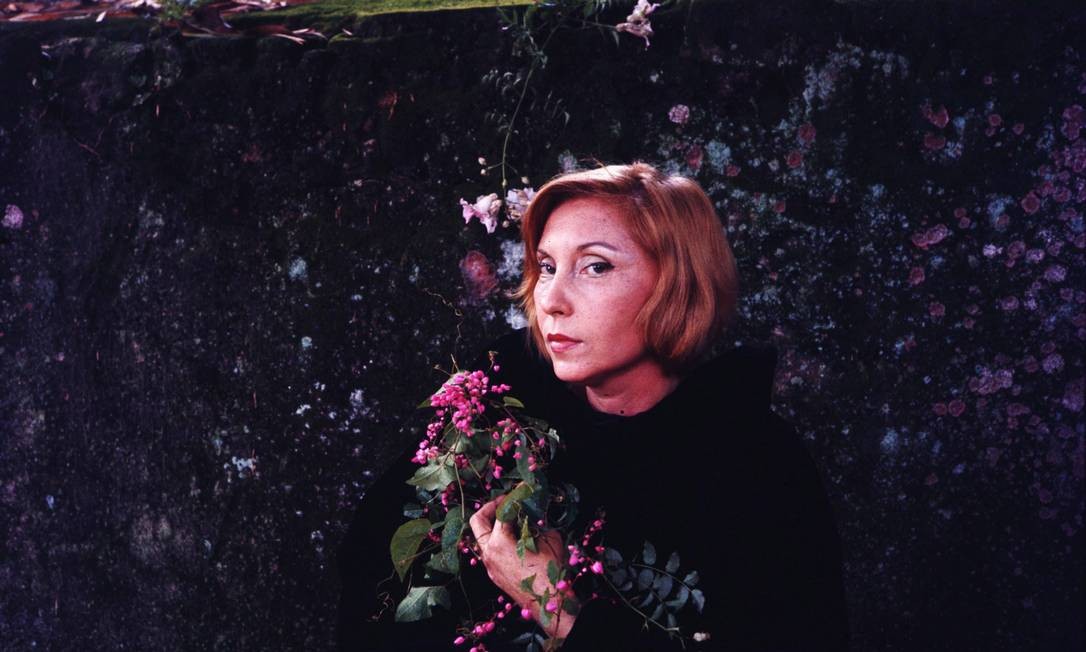
Her photographs are striking.
Her public manner could be unusual.
Her prose can be difficult.
Those facts helped create a mythology around Clarice: enigmatic, solitary, almost supernatural.
But that mythology can erase a much more concrete professional life.
She studied law.
She worked in journalism.
She wrote columns for mass-circulation newspapers.
She interviewed public figures.
She wrote children’s books.
She raised two sons.
She lived for years outside Brazil because of her husband’s diplomatic career, then returned to Rio in 1959 and rebuilt a working literary life there.[2]
Most importantly, her books are not all versions of the same mystical interior monologue.
A Hora da Estrela is not Água Viva.
Laços de Família is not A Paixão Segundo G.H..
There are recurring obsessions, but the forms change.
The voice behind the photographs
You Can Hear Clarice Lispector Speak
One of the best ways to puncture the frozen internet image of Clarice is simply to listen to her.
In February 1977, she gave a famous television interview to journalist Júlio Lerner for TV Cultura’s Panorama Especial. At her request, the interview was broadcast after her death.[14]
For years, this interview was often described as her only audiovisual record.
More recent archival research has complicated that claim. In 2024, the IMS documented other filmed material, including a 1976 television record and newly discovered footage from Clarice’s years in Washington.[15]
For a Portuguese learner, hearing Clarice is valuable for a different reason.
You can notice:
- her rhythm;
- pauses;
- her distinctive speech;
- how different the living speaker sounds from the smooth motivational voice readers may imagine from quote cards.
The IMS also preserves material in which Clarice directly states that Portuguese was her first language.[4]
That makes the interview more than literary history.
It is an encounter with a real Brazilian Portuguese speaker whose written language became deliberately stranger than her biography required it to be.

Why the work keeps generating new readings
Why Clarice Lispector Still Matters
Clarice does not need to be rescued from obscurity.
She received substantial critical recognition from the beginning of her career and was already being translated internationally during her lifetime.[2]
What changed dramatically in later decades was the scale and diversity of her readership.
Her work now circulates in contemporary translations, complete story collections, new selections, academic research, film adaptations, exhibitions, podcasts and social media.[1][10]
But the best evidence of relevance is not that people keep calling her a genius.
It is that the books continue producing incompatible readings.
Is A Paixão Segundo G.H. primarily mystical, existential, social, racial, feminist or linguistic?
Is Água Viva a novel, a lyrical performance, a meditation on art or something that refuses those categories?
Is Rodrigo S. M. caring for Macabéa by narrating her, exploiting her, or exposing the impossibility of representing another person without power entering the story?
Clarice’s work survives because those questions do not become exhausted after one correct interpretation.
Literary Portuguese becomes much easier to explore when everyday Portuguese is already automatic.
Conversational in 20 Weeks builds the broader grammar, vocabulary, listening and speaking foundation that lets you spend less energy decoding basic structures — and more energy noticing what a writer is doing with them.
FAQ
Clarice Lispector: Frequently Asked Questions
Who was Clarice Lispector?
Clarice Lispector (1920–1977) was a Brazilian writer and journalist known for formally innovative novels, short stories and crônicas. Major works include Near to the Wild Heart, Family Ties, The Passion According to G.H., Água Viva and The Hour of the Star.[1]
Was Clarice Lispector Brazilian or Ukrainian?
She was born in 1920 in what is now Ukraine to a Jewish family fleeing persecution and arrived in Brazil as a small child. She grew up principally in Recife and Rio de Janeiro, and Portuguese was her first language and the language of her literary career.[2][4]
What was Clarice Lispector’s birth name?
Her birth name was Chaya, often rendered as Haia in Brazilian biographical sources. The family adopted Brazilian first names after migration.[2]
Did Clarice Lispector study law?
Yes. She entered the University of Brazil to study law in 1939, but did not build a legal career. She was already working in journalism and publishing fiction during her studies.[2]
Why is Clarice Lispector difficult to read?
The difficulty often comes less from rare vocabulary than from unusual syntax, repetition, abstraction, unstable narrative voices and sentences that deliberately push language toward ambiguity.
Which Clarice Lispector book should I read first?
For short fiction, Family Ties is a strong introduction. The Hour of the Star is brief but formally sophisticated. Readers who want Clarice at her most radical may prefer The Passion According to G.H. or Água Viva.
What does romance mean in Portuguese literature?
In literary Portuguese, romance normally means “novel.” It does not necessarily mean a romantic love story.
What does crônica mean in Brazilian Portuguese?
A crônica is a flexible short prose form strongly associated with newspapers and magazines in Brazil. It can combine observation, essay, memory, humor, personal reflection and fiction, so no single English translation covers every example.
Did Clarice Lispector really write all the quotes attributed to her online?
No. The IMS has documented the large-scale circulation of both genuine and falsely attributed Clarice quotes online. If a quote does not identify a source work, it is worth verifying before sharing.[12]
Can Portuguese learners read Clarice Lispector?
Yes, but the best entry point depends on level. Short stories and crônicas can be easier to manage in small units, while advanced learners can compare the Portuguese original with a published translation. Shorter does not necessarily mean linguistically simple.
Sources and further reading
Research Behind This Guide
- Instituto Moreira Salles — Clarice Lispector: Life. Institutional overview of Clarice’s literary career and major genres.
- Pesquisa FAPESP — “The writer between the lines.” Biographical chronology, Maceió and Recife, law school, journalism, critical reception, translations and modern scholarship.
- Instituto Moreira Salles — Book to Book. Institutional catalogue of novels, stories, children’s literature and crônicas, including dates and genre classifications.
- Instituto Moreira Salles — Clarice’s correspondence and Portuguese. Material preserving Clarice’s statements about Recife and Portuguese as her first and intimate language.
- Instituto Moreira Salles — “Circle and Vortex in ‘The Smallest Woman in the World.’” Recent analysis of repetition, silence and the verbal surface of Clarice’s prose.
- Instituto Moreira Salles — Writing archive. Critical discussion of Clarice’s writing, the unsayable and the role of language in works such as Água Viva and The Passion According to G.H.
- New Directions — Near to the Wild Heart. Current English edition, translator Alison Entrekin and description of interior monologue and narrative epiphany.
- New Directions — The Passion According to G.H. Current English edition and synopsis of G.H.’s encounter with the cockroach.
- New Directions — The Hour of the Star. Current English edition and contextual description of Macabéa and Rodrigo S. M.
- New Directions — Clarice Lispector. Current English-language publishing catalogue, editions and translators.
- New Directions — Covert Joy: Selected Stories. Current selected-stories edition translated by Katrina Dodson.
- Instituto Moreira Salles — “Clarice é pop.” Documentation of the internet quote phenomenon and phrases circulated without reliable attribution.
- New Directions — Too Much of Life: The Complete Crônicas. Contemporary English publication of Clarice’s crônicas.
- Instituto Moreira Salles — 1977 TV Cultura interview. Context for the Júlio Lerner interview and Clarice’s request that it air after her death.
- Instituto Moreira Salles — Clarice’s Days in Washington. Updated archival research documenting additional filmed records of Clarice beyond the famous 1977 interview.
Brazilian literature becomes different when Portuguese stops being only something you translate.
Read the Story. Notice the Language.
Clarice Lispector is a reminder that knowing what every word means is only the beginning of reading. In The Short Story Club, Brazilian fiction becomes a way to build vocabulary, reading confidence and cultural understanding. If you are still building the broader language foundation first, Conversational in 20 Weeks develops the Portuguese that makes deeper reading increasingly possible.